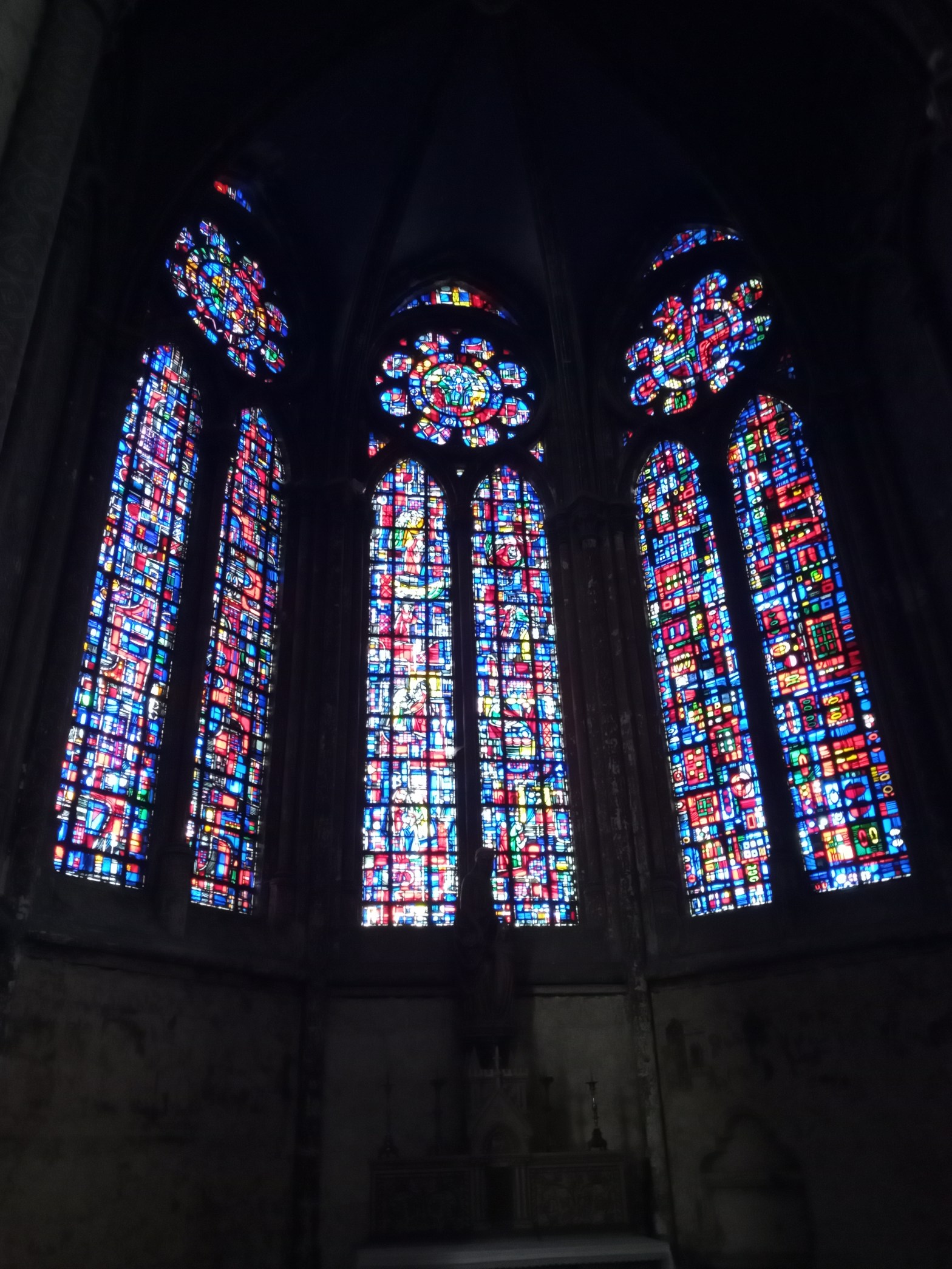
Christianity in Britain has been through three main phases: firstly, an Orthodox Church phase; secondly, a Roman Catholic Church phase; and thirdly, a Protestant reformed churches phase.
Christianity reached England very early on with missionaries sent from Judea. The missionaries were Joseph of Arimathea and Aristobulus, one of the 70 who became the first bishop of Roman Britain. They arrived at Glastonbury in Somerset.
This early evangelization gave rise to the Brittonic-speaking church. In Scotland Saint Ninian became the Apostle to the southern Picts or Caledonii tribe. In Wales Saint David belonged to this church. David spoke Welsh which is another name for Brittonic.
In England a pagan Roman citizen called Alban converted to Christianity and was martyred at St Albans. Another Roman citizen called Patrick was captured as a slave by Irish Druids and taken to Ireland. When the Romans left Britain, Patrick returned to Ireland to evangelize his former captors. He became St Patrick, patron saint of Ireland.
The church that arose in Ireland became the Gaelic-speaking Celtic Church. Saint Columba evangelized Ireland and set up Iona Abbey in the Western Isles of Scotland from where he evangelized Scotland. Saint Aidan from Iona and Saint Cuthbert founded Lindesfarne Priory from where they evangelized Northumbria.
Meanwhile, Pope Gregory the Great sent missionaries from Rome to evangelize the Anglo- Saxons in England. Saint Augustine became Archbishop of Canterbury and Paulinus was sent to York. The seven Saxon kingdoms became Christian.
England, Wales, Ireland and Scotland had become Christian and ceased to be pagan by the 9th century. But, at this point, Viking raids started to inflict death and destruction on monasteries and villages in Saxon kingdoms and among Celtic tribes.
The Latin-speaking Roman church, the Brittonic-speaking church of Ancient Britons, the Gaelic-speaking Celtic Church and the Old English-speaking Saxon church were all Orthodox churches as they predate the split between the east and west in 1054. They existed at the time, when for the first thousand years, Christianity was administered by five patriarchs. At this stage in history decisions for the one, unified Church were made at Ecumenical Councils. Later councils affecting the western church were headed only by the Pope.
The Roman Catholic Church was brought to England by the Normans. Norman clergy were brought in from Normandy to replace Saxon clergy. A hundred years after this, Catholic priests who had been married suddenly became celibate by decree, while priests of Orthodox Churches and the Celtic Church remained married.
Mass in the Catholic Church was in Latin as a religious language, and the ruling classes spoke Norman French. The Pope wielded as much power as kings, if not more power, and commanded armies.
All the wooden churches were replaced by stone-built churches, and inspiring cathedrals were constructed. Shrines and alters were constructed in sites that welcomed pilgrims. Some of the saints venerated by pilgrims at shrines in England were holy men of Saxon origin, such as Saint Cuthbert in Durham; St Edmund at Bury St Edmunds in East Anglia; and St Edward the Confessor former king of England. The canonization of English saints of Saxon origin was a shrewd move in a Norman world. It was a concession to the inhabitants of England.
The Norman church became the church of the Middle Ages in which there was a mix of popular religion with the cult of saints, mystics bringing divine messages in Middle English and Lollards criticizing corruption in the church and moral laxity among clergy.
The Protestant Reformation of the 16th century swept away what had gone before, and heralded the Modern Era. The Church of England headed by the reigning monarch and archbishop of Canterbury in the place of the Pope became an attempt at a middle way.
From its inception there were tensions between liberals and Puritans in the newly reformed Anglican Church. Finally, liberals remained in the established Church of England, while Puritans either emigrated to New England or broke away and formed Evangelical churches.
Celtic lands were still Catholic after the Reformation had taken place in England. Tudor English monarchs imposed their authority in Ireland and Scotland to prevent any coup d’état from being launched there that would return England to Catholicism.
Finally, Scotland became Protestant through the evangelization of John Knox, a Calvinist. This led to the founding of the Presbyterian Church of Scotland known as the Kirk. Ireland had Protestants imported from England and Scotland to replace Catholic landowners. Ireland remained mainly Catholic, got independence and was separated from Northern Ireland which is mainly Protestant. Wales was converted to Methodism by extensive missions in the 18th century.
Evangelical churches that came out of the Anglican Church include the Baptists, Congregationalists (now the URC), the Quakers and the Methodists.
In the 19th century Roman Catholic churches returned to Britain with the repeal of laws against practicing Catholicism.
Thus, in summary the churches in Britain were:
- A Brittonic speaking church of the Ancient Britons with a centre in Glastonbury.
- The Celtic Church which was mainly Gaelic speaking in Celtic lands and the north of England.
- A Saxon church with the archbishop sent from Rome to Canterbury, using Latin as a religious language and speaking Old English.
The above were former Orthodox churches of Britain.
- Roman Catholic Church of the Normans and Middle Ages Britain using Latin as a religious language and speaking Norman French and later Middle English.
- Protestant Anglican Church of England of the Reformation that at first contained mainstream, liberals and Puritans. This church dates from 1534.
- Protestant Evangelical churches that broke away from the Anglican Church in the 17th and 18th centuries. These were the Baptists, Congregationalists, Quakers and Methodists.
Today the last three categories are still represented by:
- The established Anglican Church of England that has High Church and Low Church congregations resembling Catholics or Evangelicals respectively.
- Independent Evangelical Baptist and Methodist churches which may be affiliated to the Evangelical Alliance, plus many other Evangelical churches.
- Post-Vatican II Roman Catholic Church which has mass in English rather than Latin and whose services are based around four readings from the Bible: one from the Old Testament, a Psalm, a Letter and a Gospel reading.
There is a sense in which each of these churches has had its moment of amazing revival and rekindling of faith among the faithful. Each one has had its special time, and now there is a coming together and renewal in recognizing each other.
15 560 words
 Merry and True