Article written by Clare Merry in February 2022
1. Introduction
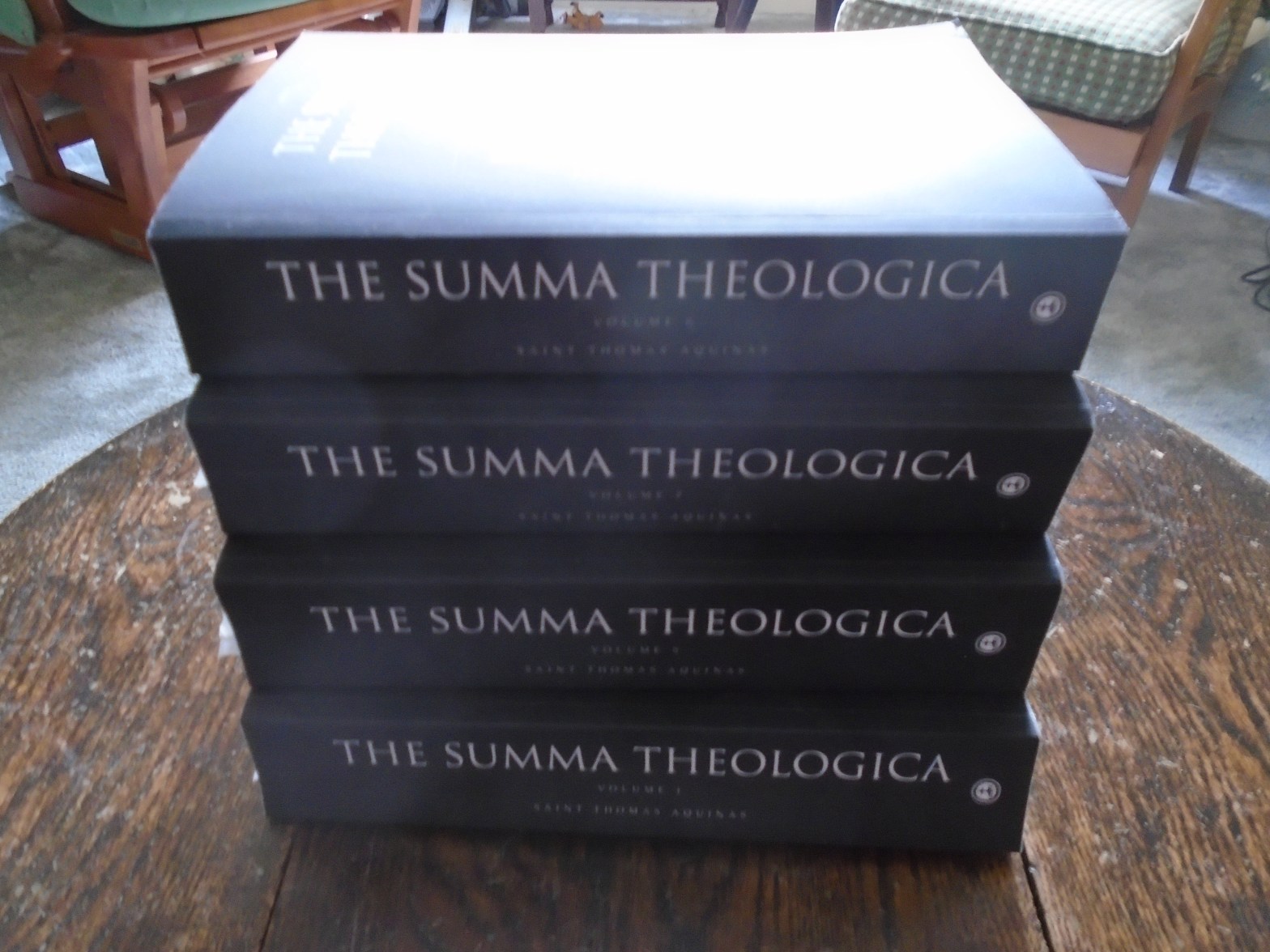
Thomas Aquinas (1225-1274) summarized human knowledge and philosophy up to 1270. His tour de force was Summa Theologica – Summary of the theology of Western Christianity. The Blackfriars edition of 1964 presents Summa in 61 volumes. Other editions have a lesser number of volumes, but more hefty tomes.
Thomas Aquinas reflected upon the nature of the human person as having an individual soul; the nature of God as Trinity; the creation of the world by the Creator acting by analogy as a craftsman; the sustaining of all creatures in being by Being. He also reflected upon the basis of laws and how to be happy, and other secular topics.
The theology of Thomas Aquinas, in particular, his Doctrine of Creation, became the theology of the Catholic Church up to recent times. All priests were instructed according to the teachings of Thomas Aquinas up to Vatican II.
The thought of Thomas Aquinas, for which he fought many battles with his contemporary scholars of the Latin Church, became the basis to concepts behind Western Civilization. I say this because it was he who recognized human persons both male and female as individuals possessing free will and the right to make choices in life.
Thomas Aquinas worked on rational thought, defining what things actually are. His personal faith, however, was completely given to the love of God, to the Person of Jesus Christ and the sanctifying influence of the Holy Spirit. The object of his writing was to glorify God as well as to promote the common good of society.
 Merry and True